Showing posts with label HTC. Show all posts

HTC HD2

The HTC HD2 follows on from last year's HTC Touch HD by using the tried-and-tested formula of stuffing in more features than ever before.
 HTC HD2

Perhaps the most obvious feature is the massive 4.3" display. This capacitive touchscreen panel has a resolution of 800 x 480 pixels, which we think is the largest screen on any production mobile phone.

The screen isn't the only thing going for the HTC HD2 - inside is a 1GHz Snapdragon processor coupled with 448 MB of RAM, ideal for running the new Windows Mobile 6.5 Professional operating system. On the back is a 5 megapixel camera with autofocus and dual LED flash, which is one of the best to be found on a Windows Mobile device.

This is a dual-band 3G device with HSPA high-speed data support, giving a maximum download speed of 7.2 Mbps and a maximum upload speed of 2 Mbps. The HTC HD2 also supports quad-band GSM with GPRS and EDGE data, and it also has built-in WiFi. Unlike some other smartphones, the HTC HD2 can be used as a tethered modem and even as a WiFi Router.

 HTC HD2 The HTC HD2 has built-in GPS with a digital compass plus HTC's Footprints application. Because this is a Windows Mobile device, then there are a variety of personal navigation applications available.

The multimedia player can cope with most major formats, and the large display is particularly well suited to video playback. There is also a built-in FM radio, and the HTC HD2 comes with a standard 3.5mm audio socket. Media files can be stored on microSD expansion cards, and the HD2 also supports stereo Bluetooth.

As we said before, this is a Windows Mobile 6.5 Professional smartphone, but as ever HTC cannot resist tinkering with it. The HD2 comes with the "HTC Sense" interface, which is the latest evolution of the popular HTC TouchFLO add-on that we have seen before. The HD2 comes with Opera Mobile for web browsing, plus it can interact with Facebook, Twitter and  HTC HD2 YouTube. This is all in addition to the usual Windows Mobile features. The software also has some nice touches such as automatically updating for your local time zone when you travel, and the weather tool has some cool animations to give you a feeling for the weather outside.

The relatively large 1230 mAh battery is quoted as giving over 5 hours talktime and 16 days standby time on 3G. It's no surprise to find that this is quite a big, heavy device at 157 grams in weight and 121 x 67 x 11mm when it comes to size. That's quite a bit bigger than the iPhone, for example, but then the display is much bigger too.

HTC say that the HD2 should be available in select European markets later this month, with other markets (including Asia) following suit later. There's no word on pricing, but we should imagine that the HTC HD2 will cost around €700 SIM-free at launch.


HTC HD2 at a glance

Available: Q4 2009

Network:
GSM 850 / 900 / 1800 / 1900 +
UMTS 900 / 2100

Data: GPRS + EDGE + UMTS (3G) + HSPA + WiFi

Screen: 4.3" 480 x 800 pixels

Camera: 5 megapixels

Size:
PDA-style device
121 x 67 x 11mm / 157 grams

Bluetooth: Yes

Memory card: MicroSD

Infra-red: No

Polyphonic: Yes

Java: Yes

GPS: Yes

OS: Windows Mobile 6.5

Battery life:
5 hours talk / 16 days standby (3G)
6 hours talk / 20 days standby (GSM)

HTC Tattoo

The HTC Tattoo is HTC's latest Android handset, designed to bring the Android platform to a wider market with a lower cost device than previous HTC Android smartphones.

 HTC Tattoo

Think of the Tattoo as being very similar to the HTC Touch 3G, but running Android instead of Windows and you'll be pretty close in terms of specifications. The HTC Tattoo has a 2.8" 240 x 320 pixel touchscreen display, a 3.2 megapixel camera, built-in GPS and a digital compass, 3.5G support, WiFi and microSD expandable memory.

The Tattoo's media player can cope with most major formats including MP3, AAC, MPEG4 and Windows Media. As with some other recent HTC phones, the Tattoo comes with a 3.5mm audio socket which is a huge improvement over the old USB-based headphone arrangement. There's a built-in FM radio as well.

 HTC Tattoo HTC have taken the standard Android package and have worked their magic on it, giving it a unified way of tracking communications with contacts, and a version of the TouchFLO interface on top. There's all sorts of Google software included as well, including Google Maps.

It's not a particularly bulky device - measuring 106 x 55 x 14mm and weighing 113 grams, it's certainly more compact than a lot of other Android smartphones. The 1100 mAh battery is quoted as being good for 5 hours 40 minutes talktime on 3G and 21 days standby time, which will probably make it a practical phone for all-day use.

Inside is the usual Qualcomm MSM7225 528 MHz processor, coupled with 256 MB of RAM which is a similar arrangement to most other comparable phones.

HTC say that the Tattoo should be available in Europe in October with other regions following later, possibly with different UMTS frequencies. We have no word on cost, but the HTC Touch 3G retails for about €350 SIM-free, so expect something broadly similar for the Tattoo.

There are quite a few Android handsets about now.. the question is, is there actually a "mass market" for this type of mass market Android phone? We will just have to wait and see..


HTC Tattoo at a glance

Available: October 2009

Network: GSM 850 / 900 / 1800 / 1900 +
UMTS 900 / 2100 (Europe / Asia)

Data: GPRS + EDGE + UMTS (3G) + HSDPA + WiFi

Screen: 2.8" 240 x 320 pixels

Camera: 3.2 megapixels

Size: Compact Touchscreen
106 x 55 x 14mm / 113 grams

Bluetooth: Yes

Memory card: MicroSD

Infra-red: No

Polyphonic: Yes

Java: Yes

GPS: Yes

OS: Android

Battery life:

5.7 hours talk / 21 days standby (3G)
6.5 hours talk / 14 days standby (GSM)

How to install the HTC Hero interface on the G1

HTC Hero on the G1

The HTC Hero is a brand new Android phone that's due to be launched in the next week or two. One of the best features about the Hero is the fact that it has a brand new user interface - called Rosie, of all things! Rosie has bee developed by HTC to help it differentiate its Android phones from the myriad competitors that are now appearing.

The new user interface has been designed from the ground up to give Android a super-slick polished look. It's not just a port of HTC's TouchFLO user interface that it created for Windows Mobile. It's a brand new dedicated Android interface that looks super-slick, has a nifty new Web browser and great new music player, among many many other enhancements.

But what if you've already got a T-Mobile G1 with the "vanilla" Android user interface? Are you forced to watch your HTC Hero-sporting friend gloat over the greatness of his new phone's UI while you're stuck with your G1's UI for the next year or so?

Fear not. If you've got the technical chops, patience, and balls of steel, you too can port the HTC Hero's user interface over to your T-Mobile G1. Be warned - it's not easy!

But it can be done, and my brother Dave (@terminal7) has proved it by successfully upgrading his G1. You can see the pics he took of his new Hero G1, plus videos and details on how to do it after the jump.

A small warning!

HTC Hero on the T-Mobile G1
First, a small warning. If you decide to do this and you do it wrong, you may end up with a decidedly unhealthy G1. So unhealthy, in fact, it'll have all the functionality of a brick!

Also, if you succeed, you'll not be able to update your phone to any new Android updates that Google releases. The current version of Android is Cupcake, which added a plethora of new features to the original Android release. With the Donut, Eclair and Flan updates all scheduled for release this year, the chances are that the existing features of your G1 will be radically improved anyway without you doing a thing. If you choose to port the Hero's interface to your G1, you won't be able to use any of these.

That said, the Hero's new Rosie User Interface is so cool, you may not actually care about the official Google updates!

What do you get with the HTC Hero user interface?

T-Mobile G1 with the HTC Hero Rosie interface
Before you decide to do this, though, you obviously need to know whether or not it's worth it. In other words, what do you get with the HTC Hero's Rosie UI that you don't get with the G1?

Well, I'll give a full run-down of the Hero's features later in the week when I do a full HTC Hero review, but in the meantime, here's a taster:

  • Updated Web browser - lets you see the whole Web page on screen and easily swipe through pages in the browser's history
  • Updated interface - brand new set of icons and flashy user interface widgets makes existing apps such as email look much, much better
  • Nifty new calendar - the calendar's been updated and is much easier to use
  • New music player - navigate your music playlists in a brand new media player
  • New media gallery - view your images in a much sexier gallery app

These are just some of the updates. In short, the new user interface makes Android look so much closer to the iPhone's beautiful interface, you wonder why Google didn't create an interface like it in the first place!

How to turn your T-Mobile G1 into an HTC Hero

T-Mobile G1 with HTC Hero interface showing Twitter
And now for the fun bit - or should that be the scary bit - actually porting the Hero interface over to your G1.

According to Dave, it's simple. Just do the following:

"After downgrading to pre-Cupcake firmware 1.0, then running telnet and rooting the thing, then flashing a new radio rom, then installing a new SPL, then installing a recovery image application, which I still cant seem to operate, then partitioning an SD card into 3 - and in 3 different file systems ! - then finally flashing a new build ROM from Haykuro and Jachero, it's all done...!"

Ahem! Told you this wasn't easy!

In a less breathless approach, the way to go about this is to follow the instructions over at XDA Developers, or just ask my brother Dave on Twitter (@terminal7). Not entirely sure how much help he can be with just 140 characters to play with, but I'm sure he'll help where he can.

Pictures of the HTC Hero interface on the G1

Right, now for all the glorious pics of HTC's Rosie on the G1. Now tell me you don't want to do this ;)
HTC Rosie interface on the G1 showing email


HTC Hero ROM on G1 showing new gallery


HTC Hero and Dave's cat!


HTC Hero on G1 showing music player


T-Mobile G1 with HTC Hero interface showing home page


HTC Hero on G1 with cool clock


HTC Hero on G1 showing Web browser

HTC Hero

The HTC Hero is HTC's third distinct Android handset, demonstrating a further evolution of that operating systen combined with a little bit of HTC know-how.

 HTC Hero The hardware is a step up from the existing HTC Magic, but perhaps the most significant development here is under the hood. HTC have taken the standard Android interface and have added "HTC Sense", a enhanced user interface which HTC says is more people-centric and easier to use. HTC Sense is roughly equivalent to the TouchFLO interface found on HTC's Windows devices, and although HTC are very good at this sort of thing, the danger is that Android phones from different manufacturers will come with a very different look-and-feel.

One major improvement that the HTC Hero brings to the Android platform is support for Flash. Yup, we can't quite believe that it has taken all this time, but it does bring significantly greater capabilities to the phone and its browser.

The display on the HTC Hero is a 3.2" 320 x 480 pixel touch-sensitive panel with an anti-fingerprint coating to keep it clean. It's very similar to the display on HTC's other Android devices, and it lags behind the newest Windows phones in terms of resolution.. and behind the iPhone in terms of size.

The HTC Hero is a 3.5G phone with 900 / 2100 MHz UMTS support and quad-band GSM, although a future US version will probably support different UMTS frequencies. The Hero has a maximum download speed of 7.2 Mbps using HSDPA, and the maximum HSUPA upload speed is 2 Mbps. 802.11b and g WiFi is supported too, which is often a more cost effective way of transferring large amounts of data. Local connectivity is via Bluetooth 2.0 or USB.

On the back is a 5 megapixel camera with autofocus, much better than the 3.2 megapixel one in the Magic. GPS is built-in for use with Google Maps and other location aware applications, and the HTC Hero also has a digital compass.

The built-in media player handles most common formats including MP3, AAC, MPEG4, H.263, H.264 and Windows Media audio and video. And at last, the HTC Hero comes with a standard 3.5mm audio socket.

 HTC Hero detail The processor is a fairly standard Qualcomm MSM7200A running at 528 MHz, and internal RAM is a decent 288 Mb. Flash storage is via microSD cards, but we're not sure how much is built into the phone. The large 1350 mAh battery is quoted as giving 7 hours of talktime on 3G and an astonishing 31 days standby time - if these figures are accurate, then it means that you can talk on the HTC Hero for pretty much a whole working day.
The HTC Hero looks very different to the Magic and the HTC Dream / T-Mobile G1 devices. The squared-off shape is a little like the new HTC Touch Diamond phones, but it retains the Magic's trackball on a pronounced "kick" at the bottom of the phone. It does look quite distinctive, and not at all like the black slabby handsets that some of the competition come out with. The white version is Teflon coated to improve protection, the brown version presumably is not. Perhaps it doesn't have the exquisite looks of the iPhone, but the HTC Hero is certainly a good looking handset.

There's no word on pricing or carrier availability, although HTC say that the Hero should be available during July in Europe and Asia later in the summer, followed by a North America version later in the year. Our guess is that the HTC Hero will cost roughly €500 SIM-free, but will be much cheaper with a contract.

HTC Hero at a glance

Available:

July 2009 (Europe), Q3 (Asia), Q4 est (US)

Network:

GSM 850 / 900 / 1800 / 1900
UMTS 900 / 2100

Data:

GPRS + EDGE + UMTS (3G) +
HSDPA + HSUPA + WiFi

Screen:

3.2" 320 x 480 pixels

Camera:

5 megapixels

Size:

PDA-style device
112 x 56 x 14mm / 135 grams

Bluetooth:

Yes

Memory card:

MicroSD

Infra-red:

No

Polyphonic:

Yes

Java:

Yes

GPS:

Yes

OS:

Android

Battery life:

7 hours talk / 31 days standby (3G)
7.8 hours talk / 18 days standby (GSM)

HTC MAX 4G review


The HTC MAX 4G was never bound to stardom, just heading to the right place. Making sense on the right market is what matters here and some handsets can only envy the MAX 4G focus. Having already previewed its Touch HD sibling we are pretty confident HTC know the touchscreen drill. But you shouldn't take anything for granted in this business so a thorough review is certainly in order.

The HTC MAX 4G is a Touch HD - add or take - and that's not a bad place to start. The WiMAX enabled handset skimps on 3G and that might just reduce it to a niche device with limited appeal. Or is there anything else to spoil the package? We are just about to find that out so sit down, take the weight off your feet and get ready to be treated to the MAX.

Key features

  • Massive 3.8" 65K-color WVGA display
  • Tri-band GSM support
  • WiMAX connectivity
  • Windows Mobile 6.1 Professional OS (by default comes in Russian)
  • TouchFLO 3D UI plug-in and gesture controls
  • Wi-Fi and GPS
  • Qualcomm ESM7206A 528 Mhz CPU and 288 MB DDR SDRAM
  • Dedicated GPU (64MB RAM reserved for graphics)
  • 3 megapixel auto focus camera
  • microSD card slot
  • Accelerometer sensor for auto screen rotation and turn-to-mute
  • Proximity sensor to automatically turn the screen off during calls
  • Touch sensitive keys with vibration feedback
  • miniUSB slot and Bluetooth v2.0 with A2DP on board
  • miniUSB to standard 3.5mm audio jack adapter included in the retail box
  • Active magnetic stylus
  • MS Office Mobile document editor
  • Excellent Opera 9.5 web browser
  • Free WiMAX plan (Yota Russia subscribers only for a limited duration)

Main disadvantages:

  • No 3G
  • No Back key
  • No dedicated camera key, no flash
  • Poor camera performance
  • Average display sunlight legibility
  • No TV out port
  • Video recording flops at CIF@30fps
  • Battery life not up to scratch
  • Fingerprint magnet front (the back is way better though)
  • Too big for comfy single-handed use, on the heavy side
  • No FM radio

Clearly designed for one market only, the HTC MAX 4G knows it's never going to have the reach or popularity of the Diamond and Touch Pro, or its 3G twin, the Touch HD. Some might even argue that the MAX 4G is barely first team material, just a sub that comes on in that one game. Well, the fact is quite a lot of handsets refuse it stay where they are supposed to (the handset is exclusive to Yota in Russia) and there may be good reasons why people are sneaking them across the border.

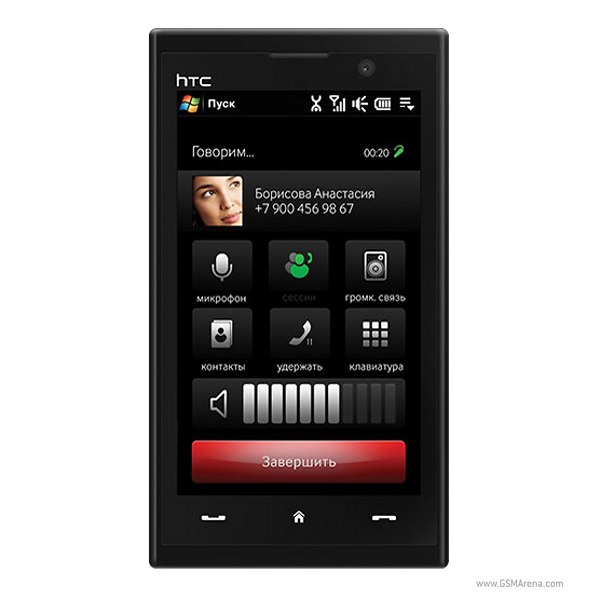
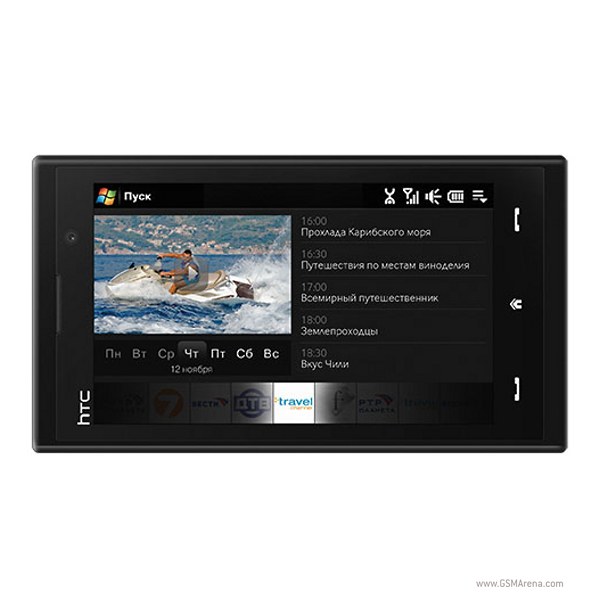
HTC MAX 4G HTC MAX 4G HTC MAX 4G HTC MAX 4G
HTC MAX 4G in all its WiMAX shine

So, the MAX 4G units that manage to escape the bear hug tend to get a warm - though not always WiMAX - reception. It's not so hard to believe given HTC's track record and the fact that the MAX 4G is actually a 3G-less Touch HD. There's no doubt the MAX 4G is absolutely on target for its intended market but let's see what it's up against elsewhere. As usual, we start with the retail package and the hardware specs of the device. Join us after the jump for the unboxing of HTC MAX 4G.

Blog Statistics